Understanding Agentic Workflows: The Future of How AI Gets Work Done
Published December 22, 2025
Understanding Agentic Workflows: The Future of How AI Gets Work Done
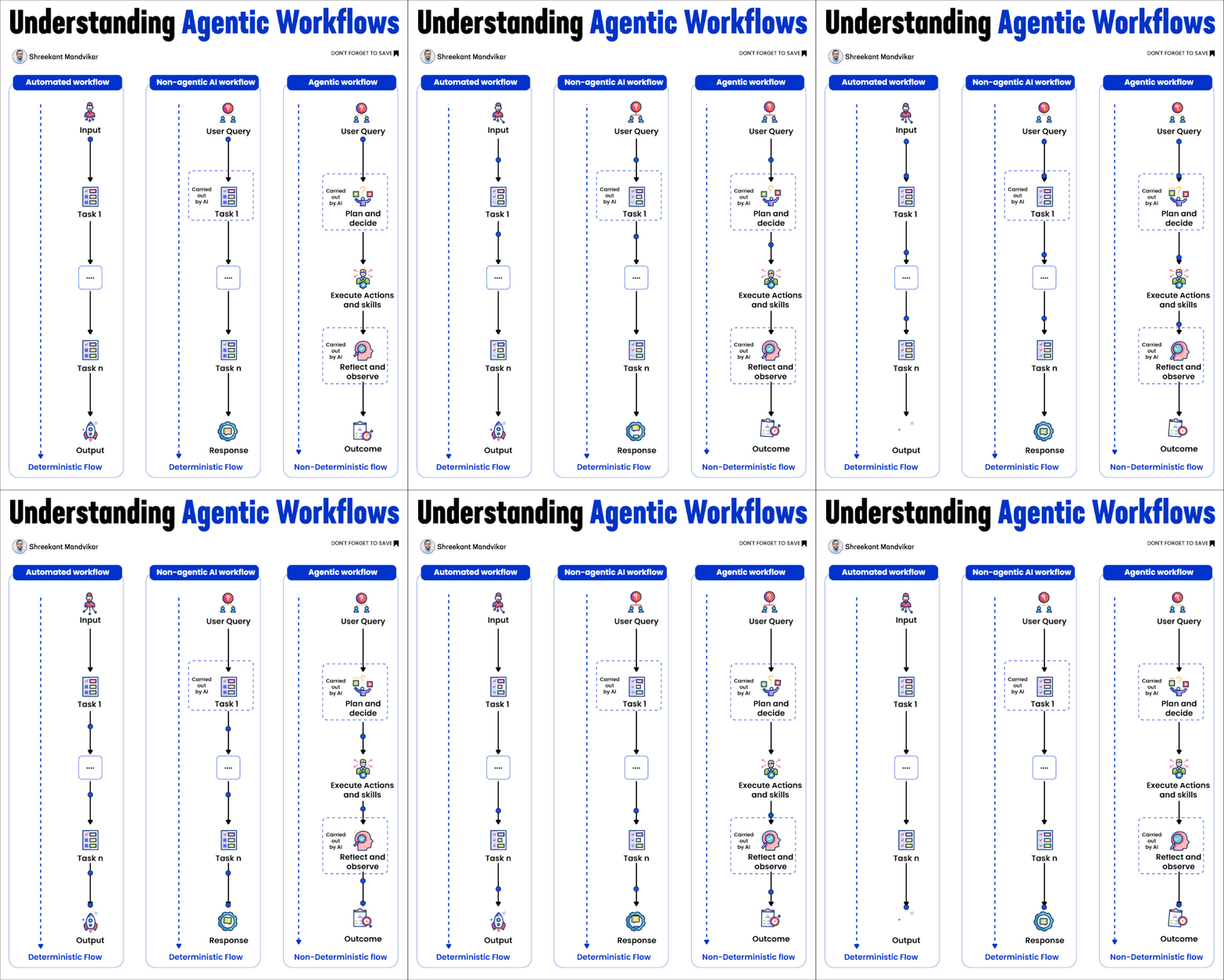
AI is rapidly evolving from simple assistants to autonomous agents capable of planning, reasoning, and executing tasks end-to-end. This visual breaks down the three major workflow models every AI professional should understand:
-
Automated Workflows A fully deterministic sequence. You define the steps → the system executes them exactly as instructed → predictable output. Great for repeatable, rule-based tasks.
-
Non-Agentic AI Workflows You submit a query → the AI completes one or many tasks → returns a response. Still deterministic because the AI isn’t deciding how to act—it's only completing what is requested.
-
Agentic Workflows This is where the future lies. The agent: • Understands the user goal • Plans and decides the next steps • Executes actions using tools •Reflects, observes outcomes, and iterates
The flow becomes non-deterministic, meaning the AI adapts its actions based on new information—much closer to human-like problem solving.
As agentic systems mature, they will move from supporting workflows to running them. Organizations that invest early in these architectures will unlock exponential efficiency and innovation.
If you want more insights on AI workflows, agents, and automation, follow me for regular updates.
Originally posted on LinkedIn · 129 likes · 11 comments