Agentic AI Security: Risks We Can’t Ignore
Published February 13, 2026
Agentic AI Security: Risks We Can’t Ignore
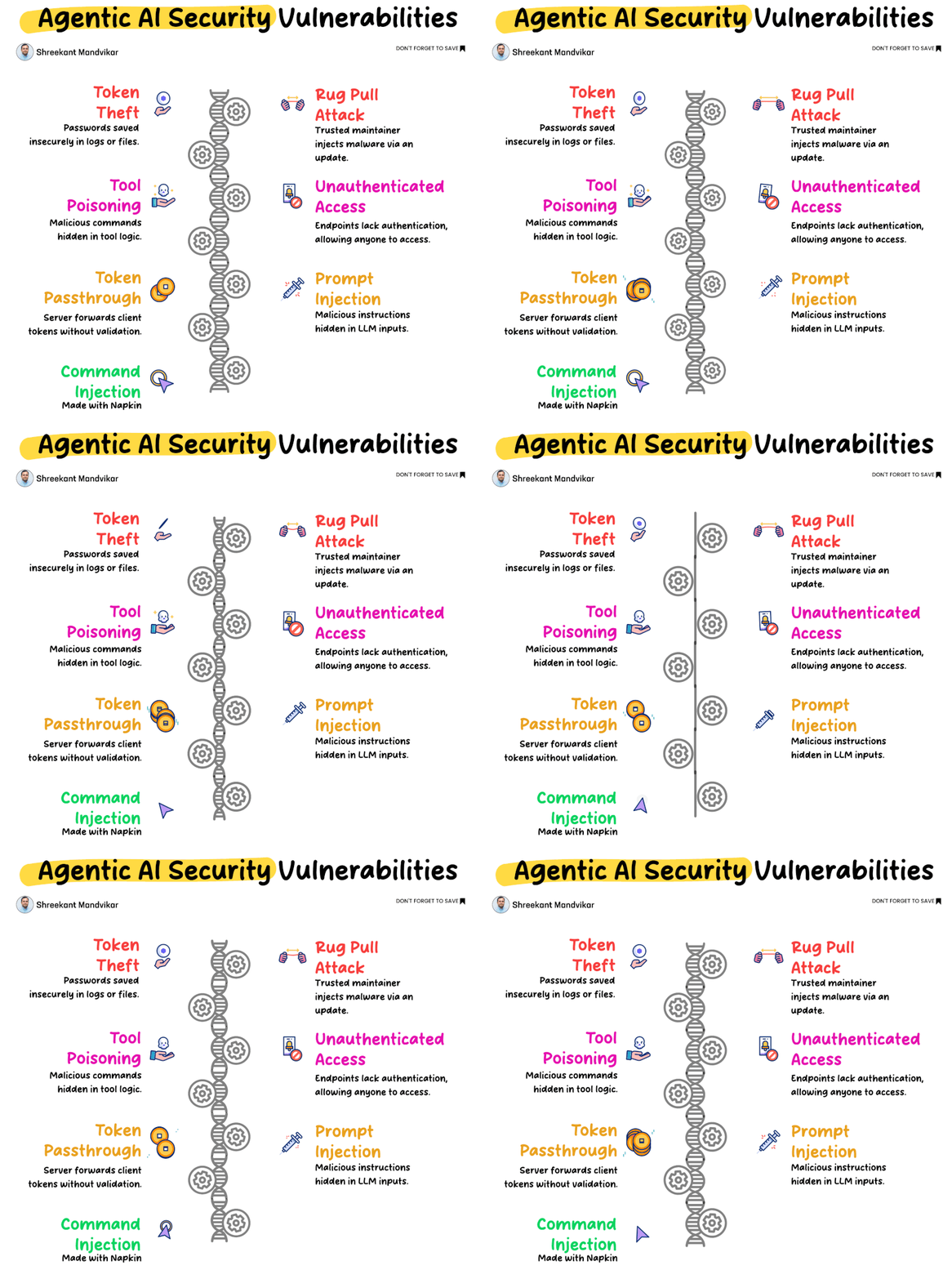
As agentic AI systems move from experimentation to real-world deployment, their attack surface expands rapidly. The visual highlights some of the most critical security vulnerabilities emerging in agent-based AI architectures—and why teams need to address them early.
Key vulnerabilities to watch closely
🥷Token / Credential Theft – Secrets leaking through logs or configuration files remain one of the easiest attack vectors.
🕵️♂️Token Passthrough – Forwarding client tokens to backends without validation can cascade a single breach across systems.
🪢Rug Pull Attacks – Trusted maintainers or updates becoming malicious pose a serious supply-chain risk.
💉Prompt Injection – Hidden instructions that LLMs follow too readily; often trivial to exploit with critical impact.
🧪Tool Poisoning – Malicious commands embedded invisibly within tools or workflows.
💻Command Injection – Unfiltered inputs allowing attackers to execute arbitrary commands.
⛔️Unauthenticated Access – Optional or skipped authentication that exposes entire endpoints.
The pattern is clear Most of these vulnerabilities are easy or trivial to exploit, yet their impact ranges from high to critical. Agentic AI doesn’t just generate content—it takes actions. That dramatically raises the cost of security failures.
What this means for builders and leaders Treat AI agents as production-grade systems, not experiments
✔️Enforce strong authentication, token hygiene, and isolation
✔️Assume prompts, tools, and updates can be adversarial
✔️Build guardrails before increasing autonomy and scale
Agentic AI is powerful, but without security-first design, it can quickly become a liability. How is your team approaching agentic AI security? #AgenticAI #AISecurity #CyberSecurity #LLM
Originally posted on LinkedIn · 239 likes · 46 comments