The shift from AI tools to AI systems is happening faster than most teams realize.
Published February 2, 2026
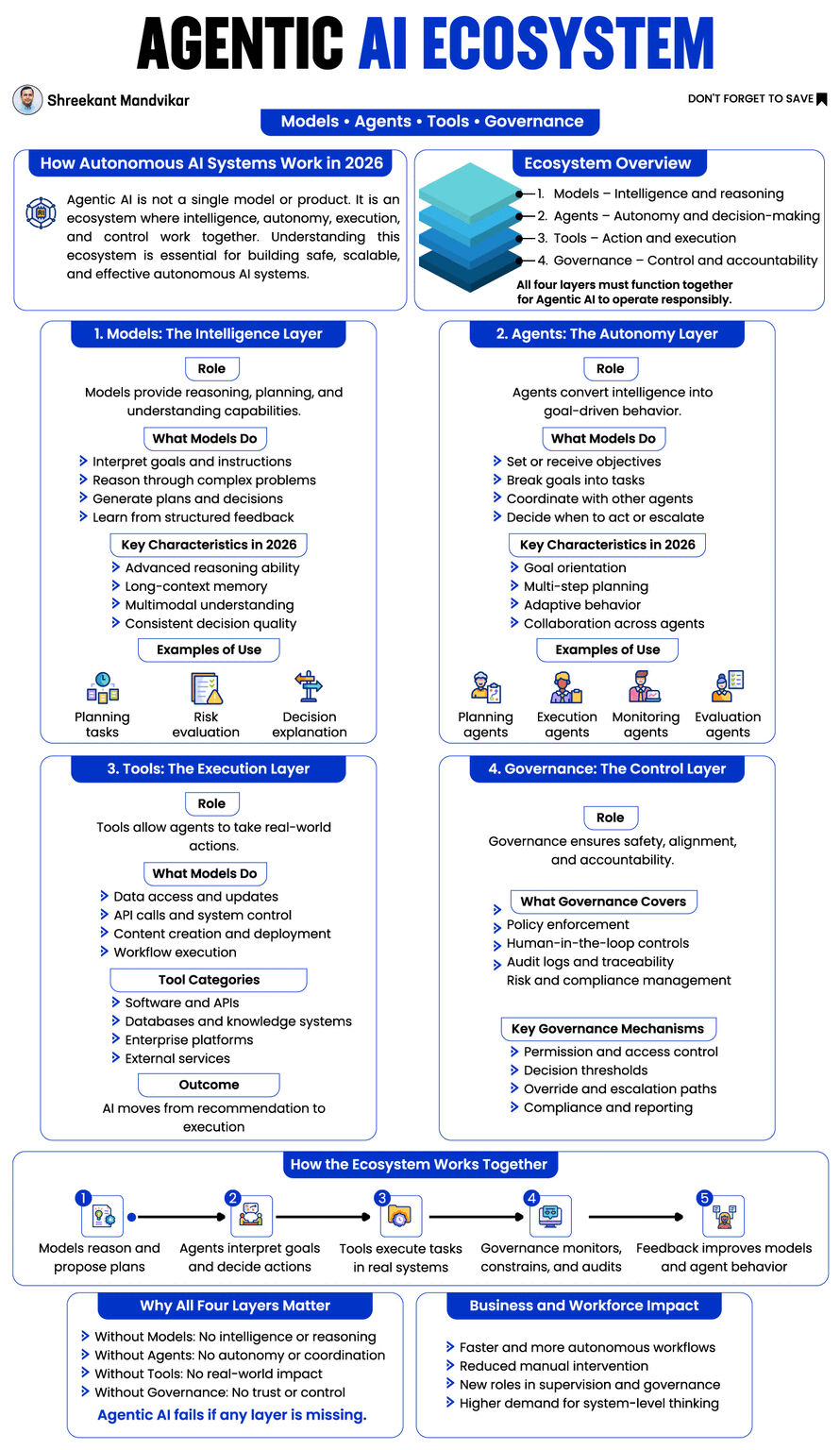
The shift from AI tools to AI systems is happening faster than most teams realize. What we’re moving toward is an Agentic AI Ecosystem — where models, agents, tools, and governance work together to deliver real autonomy, not just automation.
Here’s a simple way to think about it:
Models → Intelligence Layer They reason, plan, and generate decisions. With long-context memory and multimodal understanding, models are no longer just answering questions — they’re shaping strategies.
Agents → Autonomy Layer Agents turn intelligence into action. They break goals into tasks, coordinate with other agents, and decide when to act or escalate.
Tools → Execution Layer Tools connect AI to the real world — APIs, databases, enterprise platforms. This is where AI moves from recommendation to execution.
Governance → Control Layer Without governance, autonomy is risk. With it, we get accountability, auditability, and human-in-the-loop safeguards.
Key takeaway: Agentic AI isn’t a single model or product — it’s a coordinated ecosystem. Remove any one layer, and the system loses effectiveness or trust.
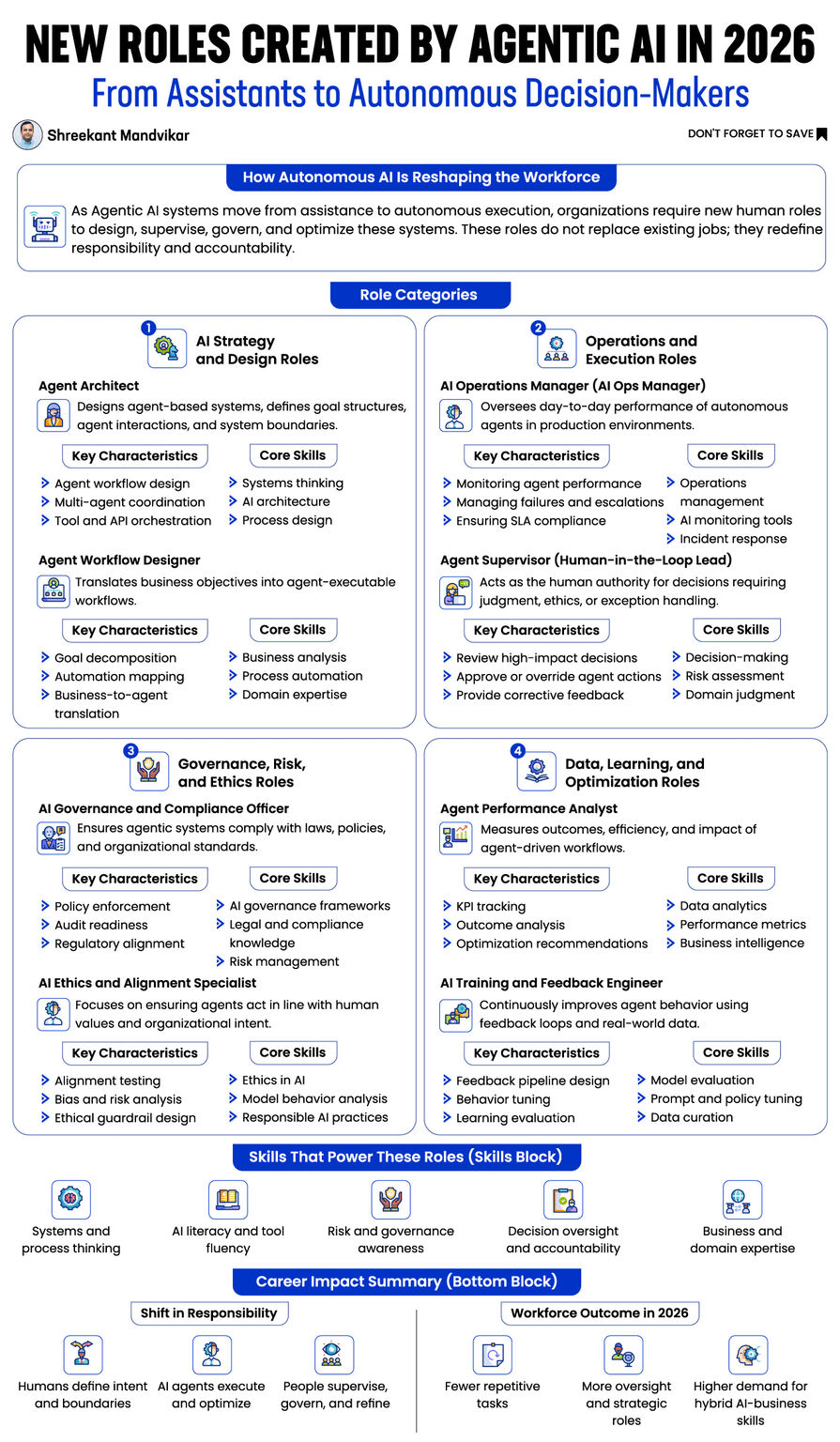
Business impact: • Faster, more autonomous workflows • Reduced manual intervention • New roles in AI supervision and governance • Growing demand for system-level thinking
The organizations that will lead in 2026 won’t just adopt AI — they’ll design ecosystems where intelligence, autonomy, execution, and control are balanced.
#AgenticAI #ArtificialIntelligence #AI2026
Originally posted on LinkedIn · 111 likes · 21 comments