The Blueprint for Building Scalable Agentic AI Workflows
Published February 4, 2026
The Blueprint for Building Scalable Agentic AI Workflows
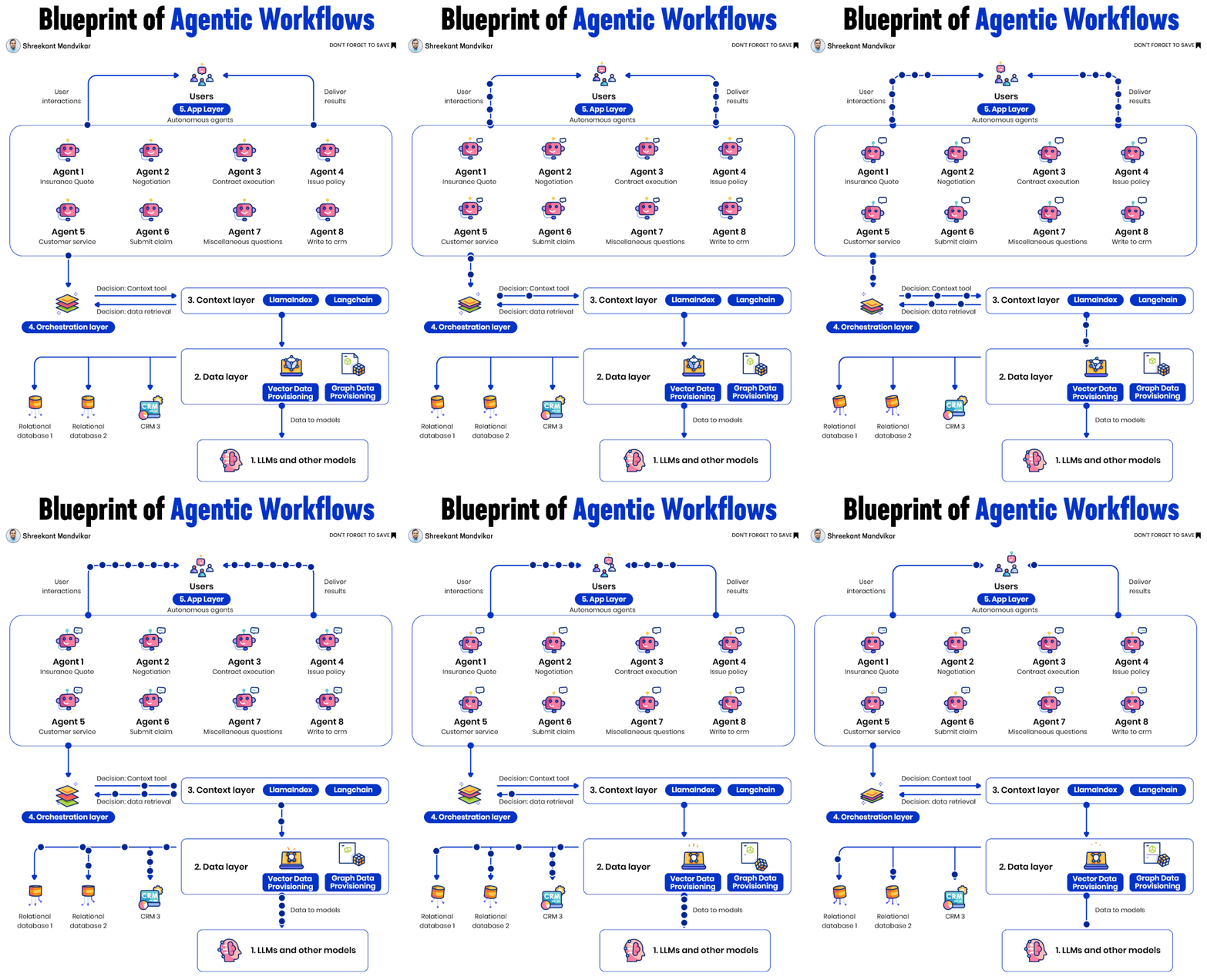
Agentic AI is no longer about deploying a single powerful model. It’s about designing coordinated systems where multiple agents, data sources, and orchestration layers work together to deliver real business outcomes.
A strong agentic workflow starts with LLMs and other models that provide reasoning and decision support. But intelligence alone is not enough. Models must be connected to structured and unstructured data through a robust data layer, including relational databases, CRM systems, vector stores, and graph data.
The context layer plays a critical role by determining how information is retrieved and applied. It ensures agents make decisions based on relevant, timely inputs rather than isolated prompts.
Above this sits the orchestration layer, which manages task sequencing, tool selection, and agent coordination. This is where reliability, scalability, and efficiency are engineered into the system.
At the top, the application layer brings together specialized agents that handle functions such as quoting, negotiation, contract execution, customer service, claims processing, and CRM updates. Users interact here, while the complexity remains abstracted behind the scenes.
The key takeaway is clear: successful agentic AI implementations depend on architecture, not just model capability. Organizations that invest in layered, well-orchestrated workflows will be best positioned to scale autonomy, reduce manual intervention, and unlock long-term value.
#AgenticAI #AIWorkflows
Originally posted on LinkedIn · 127 likes · 21 comments