Most users are unaware of the environmental cost of putting 100s of ChatGPT prompts.
Published September 13, 2023
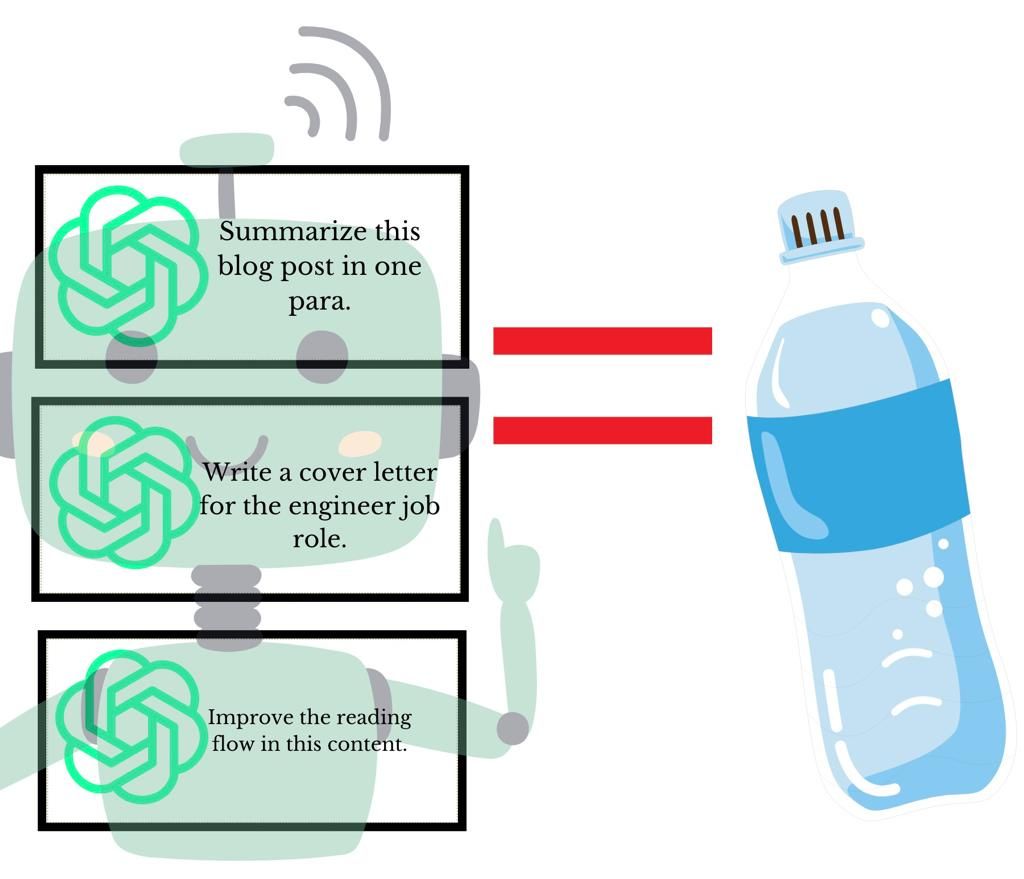
Most users are unaware of the environmental cost of putting 100s of ChatGPT prompts.
As the AI revolution accelerates, it's crucial to spotlight its environmental impact.
The recent research highlights the considerable water consumption required for training AI models like ChatGPT.
That's not just an environmental concern but a significant climate change threat if proactive actions are not taken.
Here are some hard-hitting facts:
👉 Water consumption by ChatGPT:
A study estimates that ChatGPT consumes approximately 500 millilitres of water every time it processes 5 to 50 prompts or questions.
This estimate includes indirect water usage for cooling power plants supplying electricity to data centres.
👉Water Consumption Surge:
Microsoft's global water consumption soared by 34% from 2021 to 2022, totaling nearly 1.7 billion gallons. That's over 2,500 Olympic-sized swimming pools!
This increase is primarily attributed to AI research, including generative AI models like GPT-4.
👉Google's Impact:
Google also reported a 20% increase in water use, primarily due to AI work. It's a trend seen in tech giants across the board.
🌱 The Sustainability Pledge:
Microsoft and OpenAI have committed to improving efficiency and sustainability in AI.
They aim to be carbon-negative, water-positive, and zero waste by 2030.
👉Efficient Locations:
With its cooler climate, Iowa is an efficient place for AI training due to its reduced water and energy consumption compared to hotter regions like Arizona.
Takeaway for you:
Many are unaware of the resource usage behind ChatGPT. Raising awareness is crucial to conserving resources.
Recognizing AI's threat to climate change is the first step toward mitigating its impact.
Together, we can strike a balance between technological progress and environmental responsibility.
We must combine innovation with environmental responsibility to safeguard our planet for future generations.
Post inspiration from: Pedro Berrocoso.
Originally posted on LinkedIn · 38 likes · 3 comments