Chunking is the unsung hero of RAG systems.
Published July 28, 2025
Chunking is the unsung hero of RAG systems.
Everyone talks about retrieval. Few talk about how you prepare the data you’re retrieving.
But here’s the thing:
If your LLM gives vague, irrelevant, or hallucinated answers—it’s often not the model’s fault. It’s the chunking.
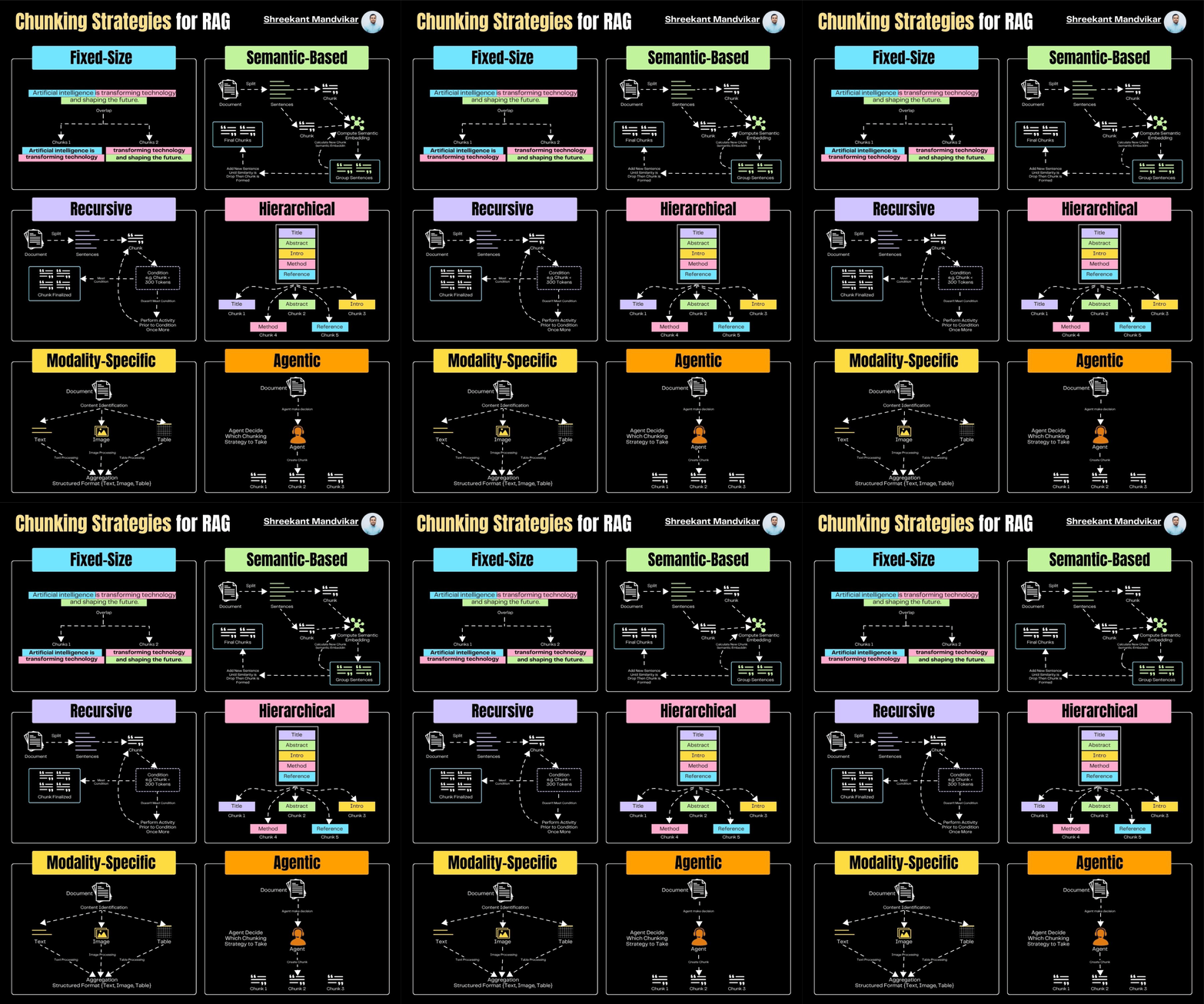
Let’s break it down: 5 strategies that shape your retrieval quality
𝟏. 𝐅𝐢𝐱𝐞𝐝-𝐬𝐢𝐳𝐞 𝐂𝐡𝐮𝐧𝐤𝐢𝐧𝐠: Just split the text into uniform pieces. Fast. Simple. But ignores meaning. You risk cutting ideas mid-sentence—and getting useless retrievals.
𝟐. 𝐒𝐞𝐦𝐚𝐧𝐭𝐢𝐜 𝐂𝐡𝐮𝐧𝐤𝐢𝐧𝐠: Instead of size, you chunk by meaning. Group sentences with high embedding similarity until the idea shifts. Much more natural for the model to work with.
𝟑. 𝐑𝐞𝐜𝐮𝐫𝐬𝐢𝐯𝐞 𝐂𝐡𝐮𝐧𝐤𝐢𝐧𝐠: Start structured. Break big sections into smaller ones. Then recursively trim anything too long. Gives you control—and keeps semantic integrity intact.
𝟒. 𝐒𝐭𝐫𝐮𝐜𝐭𝐮𝐫𝐞-𝐛𝐚𝐬𝐞𝐝 𝐂𝐡𝐮𝐧𝐤𝐢𝐧𝐠: Use what’s already there: titles, headings, bullet points. Great for legal docs, research papers, technical manuals. You respect how humans already organize the content.
𝟓. 𝐋𝐋𝐌-𝐛𝐚𝐬𝐞𝐝 𝐂𝐡𝐮𝐧𝐤𝐢𝐧𝐠: The most advanced: feed the full document to the model, and let it decide where the breaks should be. It chunks based on flow, topic, and structure, not just size.
𝐖𝐡𝐲 𝐭𝐡𝐢𝐬 𝐦𝐚𝐭𝐭𝐞𝐫𝐬? • Good chunking = better context = better answers • It reduces hallucinations • It improves hybrid search (keyword + vector) • And it builds a more robust memory system
If you’re building with LangChain, LlamaIndex, Weaviate, or any RAG stack— don’t just tune your prompts or vector DB.
Fix your chunks. That’s where relevance starts.
What chunking strategy has worked best for your team? Let’s trade notes.
Originally posted on LinkedIn · 43 likes · 18 comments